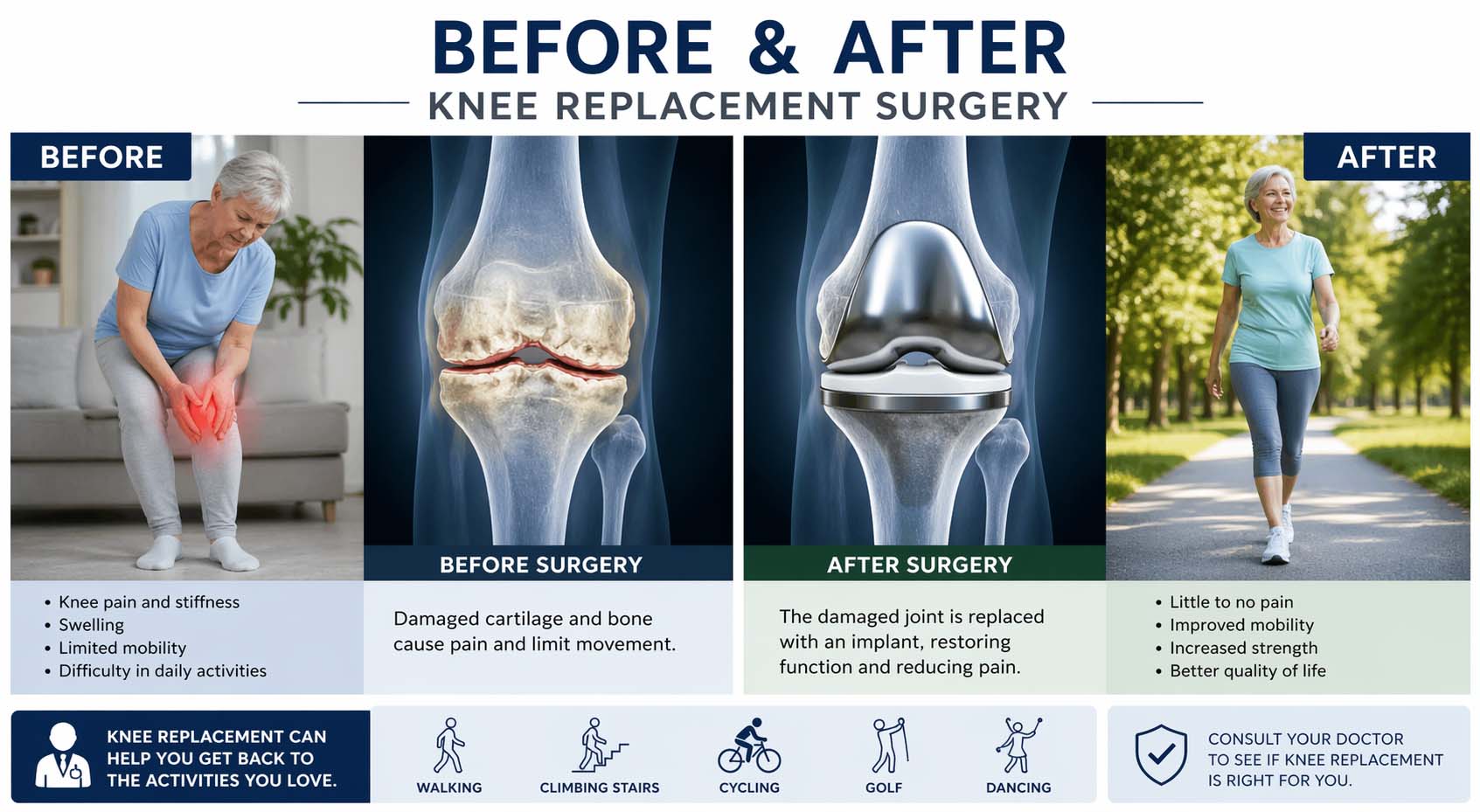
Understanding before and after knee replacement surgery can help patients feel more confident and prepared for the procedure. Knee replacement surgery is commonly recommended for people with severe arthritis, chronic pain, joint damage, or limited mobility that has not improved with other treatments.
This surgery can greatly improve quality of life by reducing pain and restoring movement. However, success often depends on proper preparation before the operation and following rehabilitation instructions afterward. Knowing what to expect can reduce anxiety and support a smoother recovery.
What Is Knee Replacement Surgery?
Knee replacement surgery, also called knee arthroplasty, involves replacing damaged parts of the knee joint with artificial components made of metal, plastic, or ceramic materials. These implants are designed to mimic the natural movement of the knee.
Doctors may recommend total knee replacement when the whole joint is damaged, or partial knee replacement when only one area of the knee is affected.
Most patients choose surgery when knee pain interferes with walking, climbing stairs, sleeping, or daily activities.
Before Knee Replacement Surgery
The period before surgery is important because it helps prepare the body and mind for recovery. Your doctor will usually perform exams, imaging tests, and blood work to confirm you are ready for the procedure.
Patients are often advised to strengthen leg muscles through gentle exercises before surgery. Stronger muscles can support faster recovery afterward.
Weight management may also be recommended because reducing excess body weight can lessen stress on the knee joint and improve surgical outcomes.
Smoking cessation is strongly encouraged, since smoking can slow healing and increase risks during surgery.
Your doctor may review medications and advise stopping certain blood thinners or supplements before the operation.
Preparing Your Home Before Surgery
Making your home safer before surgery can make recovery easier. Since movement may be limited during the first weeks, many patients prepare in advance.
Helpful changes may include:
- Removing loose rugs or tripping hazards
- Placing daily essentials within easy reach
- Installing handrails or grab bars
- Arranging a sleeping area on the main floor if stairs are difficult
- Using a stable chair with armrests
Planning transportation and asking family or friends for support can also reduce stress.
Mental Preparation Before Surgery
Many people feel nervous before knee replacement surgery. This is normal. Learning about the process, asking questions, and understanding recovery expectations can help reduce fear.
Setting realistic goals is also important. Improvement often happens gradually over weeks and months, not overnight.
Patients who stay positive and committed to physical therapy often achieve better results.
The Day of Surgery
On the day of surgery, patients arrive at the hospital or surgical center and meet the medical team. Anesthesia may be general or spinal depending on the case.
The procedure usually takes one to two hours, though total hospital time may be longer. Many patients begin standing or walking with assistance within the same day or the next day.
Modern techniques and pain management methods often allow quicker mobilization than in the past.
After Knee Replacement Surgery
The first days after knee replacement surgery focus on pain control, movement, and preventing complications. Nurses and therapists help patients stand, walk, and begin gentle exercises.
Swelling and discomfort are common during the early recovery period. Ice, elevation, and prescribed medications can help manage symptoms.
Walking aids such as a walker or cane are often used temporarily.
Physical Therapy and Rehabilitation
Physical therapy is one of the most important parts of recovery. Exercises help restore strength, flexibility, and knee movement.
Therapy may begin shortly after surgery and continue for weeks or months. Common exercises include:
- Gentle knee bends
- Straight leg raises
- Walking practice
- Balance work
- Strength training
Consistency matters more than speed. Following your therapist’s instructions can improve long-term results.
Recovery Timeline
Every patient heals differently, but many people follow a general timeline.
During the first two weeks, swelling and soreness are common, but walking gradually improves. By four to six weeks, many patients can perform more daily activities with less assistance.
At three months, many patients notice significant pain relief and better mobility. Full recovery may continue for six months to one year depending on age, health, and dedication to rehab.
Before and After Knee Replacement Surgery Results
The biggest difference before and after knee replacement surgery is often reduced pain and improved movement. Many patients report being able to walk farther, climb stairs more easily, and return to hobbies they had stopped.
Before surgery, common problems may include:
- Constant knee pain
- Stiffness
- Swelling
- Difficulty walking
- Trouble sleeping due to pain
After successful surgery and rehab, many patients experience:
- Less pain
- Better knee function
- Improved quality of life
- Increased independence
- Better sleep and activity levels
Tips for Better Recovery
To support healing after surgery:
Stay active as recommended, but avoid overdoing it. Follow exercise instructions carefully. Keep follow-up appointments with your doctor. Maintain a healthy weight to protect the new joint.
Eat nutritious foods rich in protein, vitamins, and minerals to support healing. Drink enough water unless your doctor advises otherwise.
Report warning signs such as fever, severe swelling, calf pain, or redness immediately.
Long-Term Success
Artificial knee joints can last many years, especially with proper care. Many implants function well for 15 to 20 years or longer.
Protecting the new knee often includes avoiding high-impact sports, maintaining fitness, and staying at a healthy weight.
Regular movement such as walking, swimming, or cycling can help keep the joint strong and functional.
Conclusion
Learning about before and after knee replacement surgery helps patients prepare for one of the most effective treatments for chronic knee pain. Before surgery, planning and strengthening can improve outcomes. After surgery, physical therapy, patience, and healthy habits are key to recovery.
While healing takes time, many people enjoy major improvements in comfort, mobility, and daily life. If knee pain is limiting your lifestyle, discussing options with an orthopedic specialist may be the first step toward lasting relief.