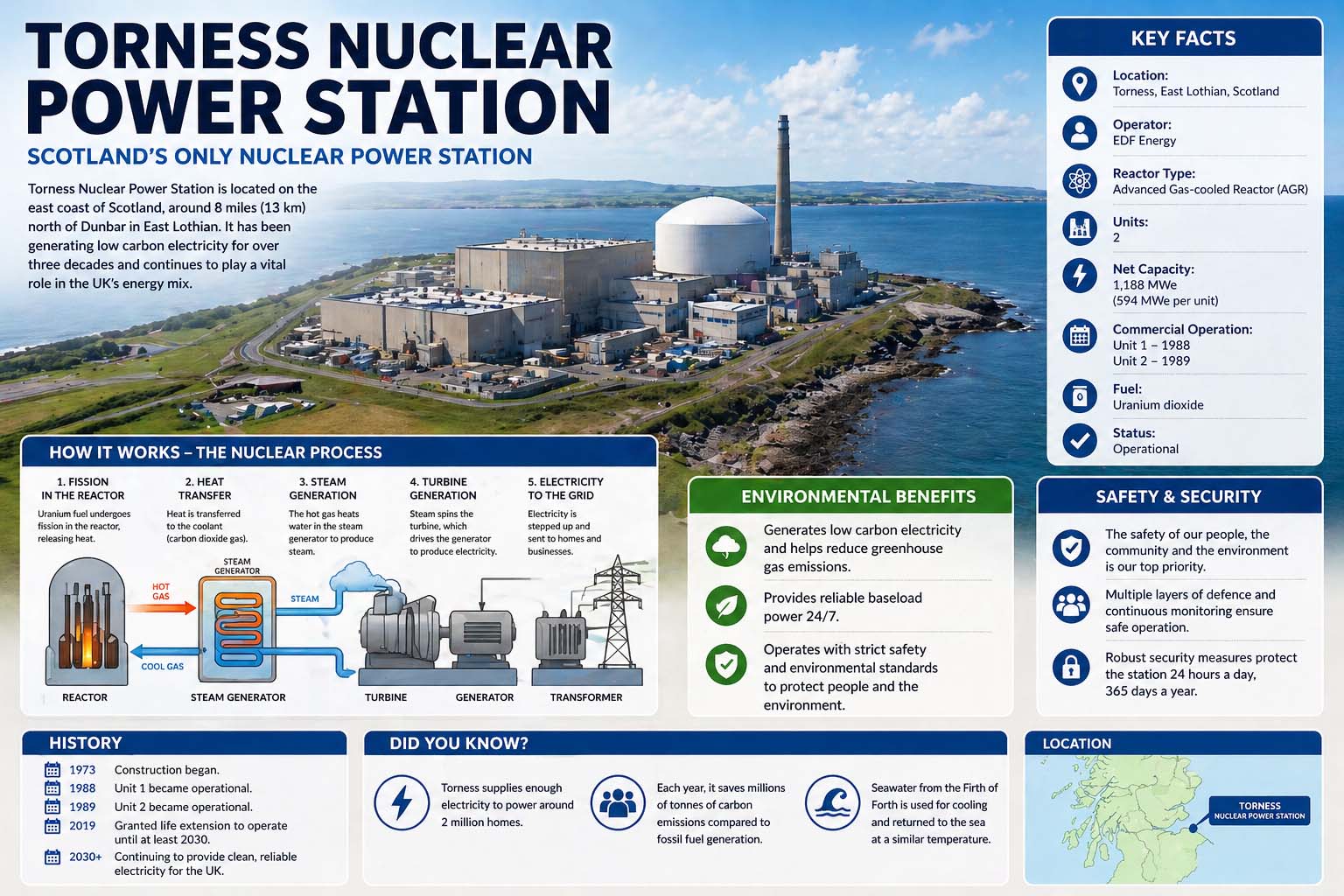
Torness Nuclear Power Station is one of the most important electricity-generating facilities in Scotland. Located on the southeast coast near Dunbar, this power station has played a major role in supplying low-carbon energy to homes and businesses for decades. As energy demands grow and countries seek cleaner alternatives to fossil fuels, Torness Nuclear Power Station continues to be a significant part of the United Kingdom’s energy infrastructure.
What Is Torness Nuclear Power Station?
Torness Nuclear Power Station is a -powered electricity generating plant situated in East Lothian, Scotland. It is operated by EDF Energy and uses Advanced Gas-cooled Reactor (AGR) technology. The station began commercial operations in 1988 and has since become a dependable source of electricity.
The plant was designed to provide stable and continuous power generation, unlike some renewable sources that depend on weather conditions. This makesn especially valuable for maintaining a balanced and reliable energy grid.
Location and Strategic Importance
The station is positioned along the North Sea coastline, which provides convenient access for cooling water systems required in nuclear energy production. Its location near major Scottish population centers allows efficient transmission of electricity to the national grid.
East Lothian benefits economically from the plant through employment opportunities, local contracts, and community investment programs. Torness Nuclear Power Station has become a familiar landmark in the region and remains closely connected to the local economy.
How Torness Nuclear Power Station Works
The facility uses two AGR reactors. These reactors use carbon dioxide gas as a coolant and graphite as a moderator. Heat generated through nuclear fission is used to create steam, which powers turbines connected to generators.
This process allows to produce a large amount of electricity without directly burning coal, oil, or natural gas. As a result, operational carbon emissions are significantly lower compared with many conventional power stations.
Contribution to Scotland’s Energy Supply
Scotland has ambitious climate and renewable energy goals, but nuclear power remains an important part of the energy mix. provides a steady source of baseload electricity, helping ensure supply during periods when wind or solar output may be lower.
Because of its reliability, the station supports homes, industries, hospitals, and transportation systems. It also helps reduce dependence on imported fossil fuels and strengthens national energy security.
Safety at Torness Nuclear Power Station
Safety is the highest priority at Nuclear facilities in the UK operate under strict regulations and regular inspections. Multiple layers of protection are built into reactor design, operations, and emergency planning.
Staff receive extensive training, and systems are continuously monitored. Maintenance schedules are carefully planned to ensure equipment remains in safe working condition. Regulatory oversight comes from national authorities responsible for nuclear safety and environmental protection.
Modern safety culture means every aspect of operation is reviewed, tested, and improved whenever needed.
Environmental Impact
Compared with fossil-fuel plants, produces electricity with very low greenhouse gas emissions during normal operation. This makes it valuable in efforts to combat climate change.
However, nuclear energy also raises questions regarding long-term waste management and plant decommissioning. Used nuclear fuel and other radioactive materials must be safely stored and managed under strict regulations.
Despite these challenges, many experts view nuclear power as an important transitional technology for reducing emissions while renewable capacity expands.
Employment and Community Benefits
Torness Nuclear Power Station supports hundreds of skilled jobs, including engineers, technicians, safety specialists, and administrative staff. It also creates indirect employment through contractors, suppliers, and service industries.
The plant has historically supported education, apprenticeships, and community projects in East Lothian. These initiatives help develop future technical talent and strengthen ties between the station and surrounding communities.
Future of Torness Nuclear Power Station
Like many nuclear facilities, has an operational lifespan determined by engineering assessments, maintenance capability, and regulatory approvals. Lifetime extensions have been considered over the years to keep the station running safely for longer.
Eventually, the plant will enter decommissioning, a carefully managed process involving shutdown, fuel removal, dismantling, and site restoration. This process can take many years and requires specialized expertise.
The future of Torness also reflects wider debates about whether the UK should invest in new nuclear stations, expand renewable energy, or pursue a balanced mix of both.
Why Torness Nuclear Power Station Matters
Torness Nuclear Power Station matters because it provides dependable electricity, supports jobs, and contributes to lower-carbon energy production. In a time of changing energy priorities, it represents the role nuclear power can play in maintaining grid stability while countries transition toward cleaner systems.
Its decades of service demonstrate how large-scale infrastructure can shape local communities and national energy policy. Whether viewed as a bridge technology or a long-term solution, remains one of Scotland’s most significant energy assets.
Final Thoughts
Torness Nuclear Station continues to stand as a major contributor to Scotland’s electricity network. With reliable output, strong safety oversight, and economic benefits, it remains a notable example of modern nuclear energy in the United Kingdom. As the country moves toward a greener future, will remain part of the conversation about sustainable and secure generation.