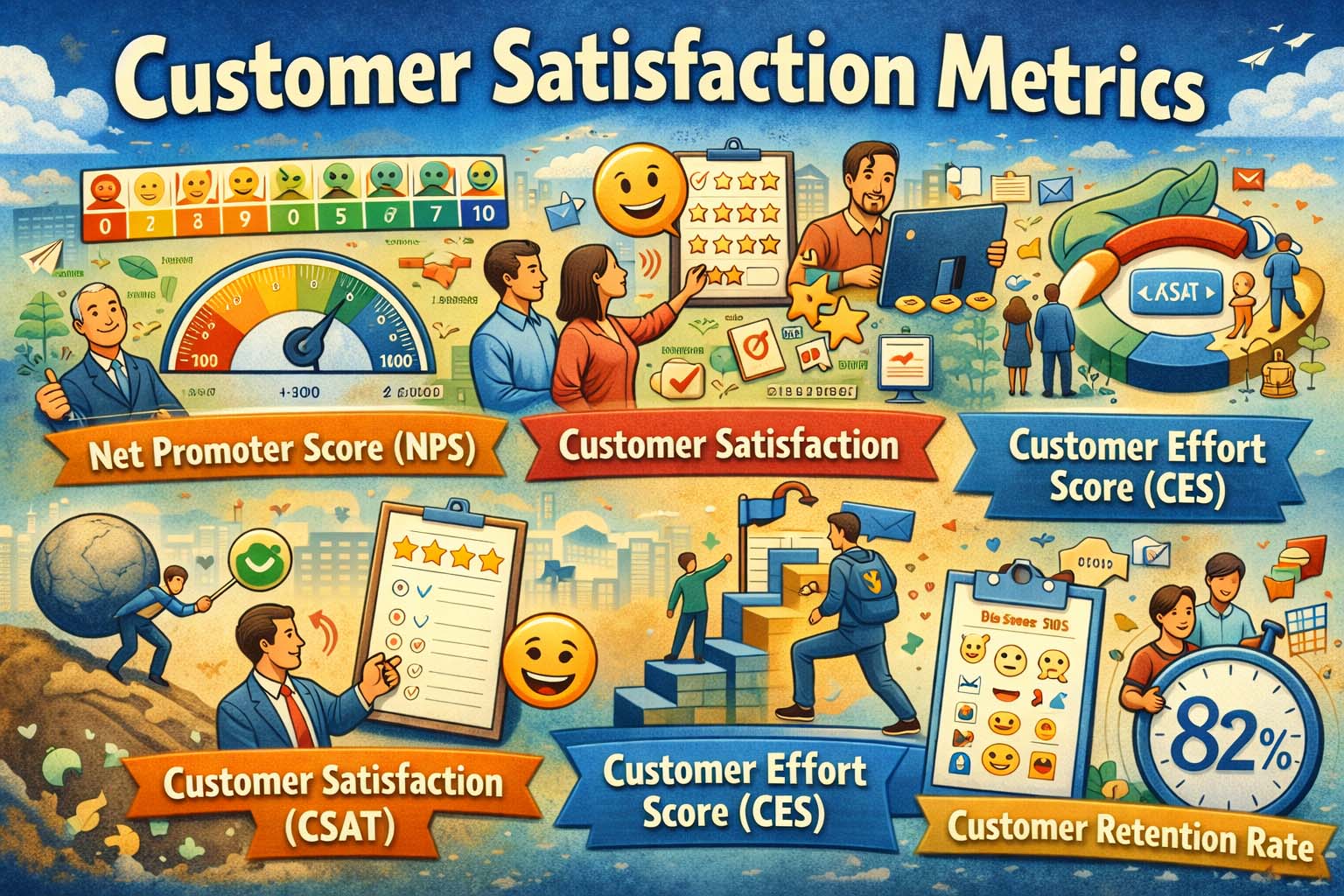
In today’s customer-driven marketplace, businesses that prioritize customer experience consistently outperform their competitors. One of the most effective ways to understand and improve experience is by tracking customer satisfaction metrics. These metrics provide valuable insights into how customers perceive your brand, products, and services.
Whether you run a small business or a large enterprise, understanding customer satisfaction metrics can help you boost loyalty, reduce churn, and increase long-term profitability. This SEO-friendly guide will walk you through everything you need to know about customer satisfaction metrics and how to use them effectively.
What Are Customer Satisfaction Metrics?
Customer satisfaction are measurable indicators that businesses use to evaluate how satisfied customers are with their offerings. These metrics help organizations assess customer experience, identify pain points, and improve service quality.
By tracking these metrics, companies can make informed decisions that enhance customer relationships and drive growth.
Why Customer Satisfaction Metrics Are Important
1. Improve Customer Retention
2. Boost Brand Loyalty
Customers who have positive experiences tend to become loyal advocates.
3. Increase Revenue
Higher satisfaction often leads to repeat purchases and referrals.
4. Identify Areas for Improvement
Metrics highlight weaknesses in your processes or services.
Key Customer Satisfaction to Track
1. Customer Satisfaction Score (CSAT)
CSAT measures how satisfied customers are with a specific interaction.
Example question:
“How satisfied are you with our service?”
Formula:
(Number of satisfied customers ÷ Total responses) × 100
2. Net Promoter Score (NPS)
NPS evaluates customer loyalty and their likelihood to recommend your business.
Categories:
- Promoters (9–10)
- Passives (7–8)
- Detractors (0–6)
Formula:
% Promoters – % Detractors
3. Customer Effort Score (CES)
Lower effort equals higher satisfaction.
4. Customer Retention Rate
This metric tracks how many customers continue to do business with you over time.
5. Churn Rate
Churn rate shows the percentage of customers who stop using your services.
A high churn rate indicates dissatisfaction.
6. First Response Time
This measures how quickly your team responds to customer inquiries.
7. Resolution Time
Tracks how long it takes to resolve customer issues.
How to Collect Customer Satisfaction Data
1. Surveys
Send surveys after purchases or customer interactions.
2. Feedback Forms
Allow customers to share feedback directly on your website.
3. Social Media Monitoring
Track customer opinions on social platforms.
4. Reviews and Ratings
Analyze reviews on platforms like Google and Trustpilot.
Best Practices for Using Customer Satisfaction Metrics
1. Ask Clear Questions
Avoid confusing or overly complex survey questions.
2. Use Multiple Metrics
Combine CSAT, NPS, and CES for a complete picture.
3. Analyze Trends
Track changes over time to identify patterns.
4. Take Action
Use feedback to improve products and services.
How to Improve Customer Satisfaction Metrics
1. Provide Excellent Customer Support
Offer fast, helpful, and friendly support across all channels.
2. Personalize the Experience
Tailor your services based on customer preferences.
3. Train Your Team
Ensure employees understand customer expectations.
4. Simplify Processes
Reduce friction in customer interactions.
5. Use Technology
Implement CRM systems and analytics tools to track metrics.
Common Mistakes to Avoid
1. Ignoring Negative Feedback
Negative feedback is valuable for improvement.
2. Over-Surveying Customers
Too many surveys can lead to fatigue.
3. Focusing Only on Numbers
Understand the reasons behind the data.
4. Not Closing the Loop
Always follow up with customers after feedback.
The Role of Customer Satisfaction Metrics in SEO
Customer satisfaction metrics also impact SEO (Search Engine Optimization) in several ways:
- Positive reviews improve search rankings
- Lower bounce rates signal better user experience
- Higher engagement increases dwell time
- Strong reputation builds authority
Search engines favor websites that provide excellent user experiences, making customer satisfaction metrics an indirect but powerful SEO factor.
Future Trends in Satisfaction Metrics
1. AI and Automation
AI tools are helping businesses analyze customer data more efficiently.
2. Real-Time Feedback
Instant feedback allows quick responses and improvements.
3. Predictive Analytics
Businesses can anticipate customer needs and behavior.
4. Omnichannel Experience
Tracking satisfaction across multiple channels provides a complete view.
SEO Tips for Customer Satisfaction Metrics Content
To make your content SEO-friendly:
- Use the keyword customer satisfaction metrics naturally throughout the article
- Include headings (H1, H2, H3) for better readability
- Write high-quality, engaging content
- Optimize meta title and description
- Use internal and external links
Conclusion
Understanding and tracking ential for any business aiming to succeed in today’s competitive environment. These metrics provide actionable insights that help improve customer experience, increase loyalty, and drive growth.
By focusing on key metrics like CSAT, NPS, and CES, and implementing best practices, you can create a customer-centric business that stands out in the market. Combine these strategies with strong SEO practices to maximize visibility and long-term success.